

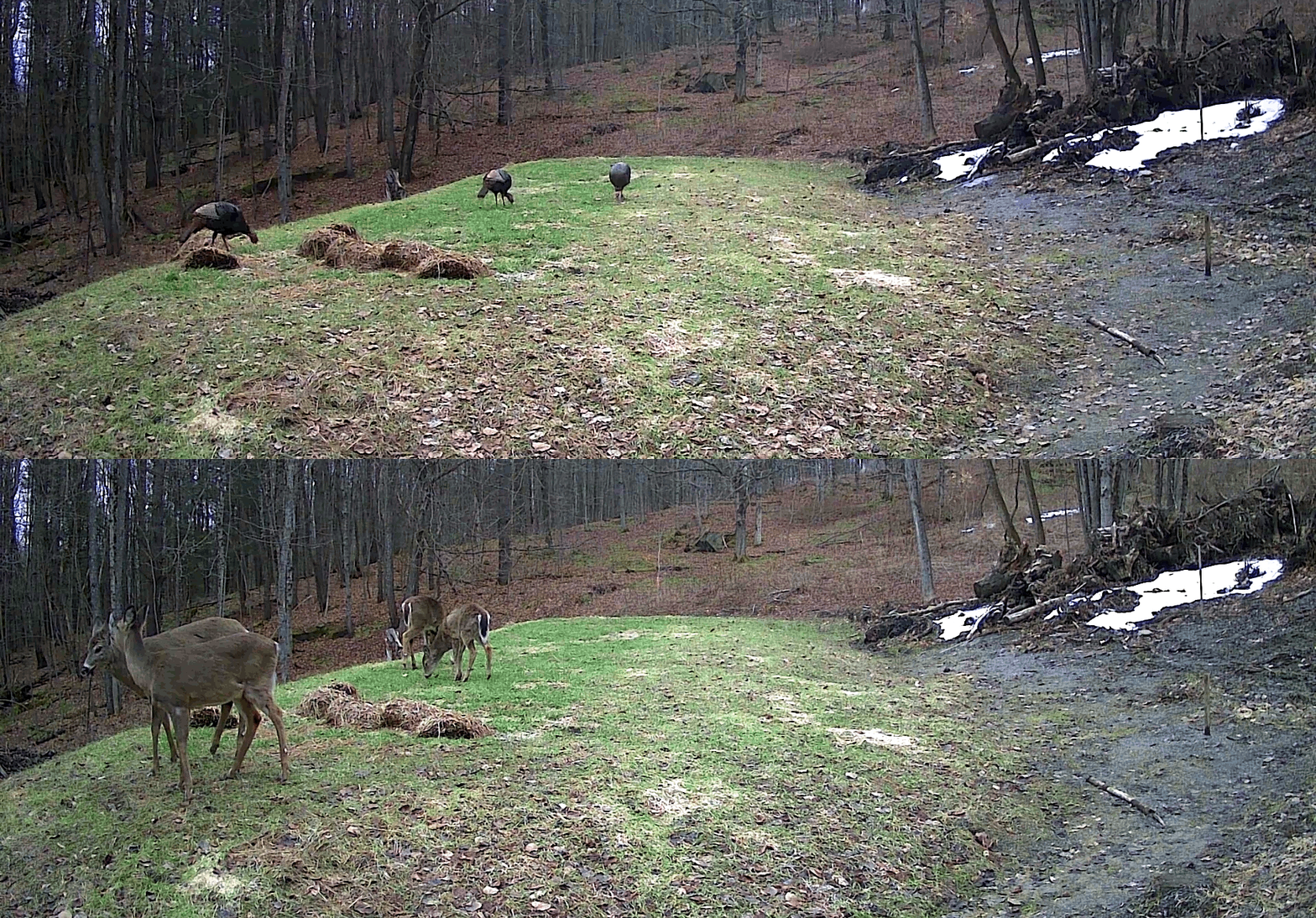
With the snow in Vermont finally disappearing, we now get to begin planning and putting in our outdoor gardens and other spaces. Fortunately, we have a lot more space to work with than we have had previously. We also have some unexpected helpers.
Does anyone remember our garden bunnies from back in Minneapolis? Our plan here is a bit like that, but, much, much bigger, in all kinds of ways.
For those who don’t remember the story of our garden bunnies, here is a refresher…
When we first put in our front-yard vegetable garden at our home in Minneapolis, we included a decent-sized strawberry patch. For the first few years of our garden, a mother rabbit liked to nest in the strawberry patch and raised multiple batches of babies every year. (Note: The Cooper’s Hawk nesting in the tree across the street was very appreciative of this arrangement.)
Many people were shocked that we let the mother rabbit and her babies stay. They were sure she and her kids would destroy our garden. Being somewhat lazy gardeners, however, we had neither the inclination nor hearts to set up an unnecessary fight with the neighborhood wildlife. So, we just let them be. We took a similar approach with the clover, dandelions and other “weeds” that tried to take over our garden.
One day, sitting on the patio, watching the garden bunnies move down a row of kale plants, we noticed something interesting: The rabbits wanted the clover and the dandelions more than they wanted the kale. They would move between the kale plants, leaving them alone, while eating the wild flowers. It turned out that the little fluff balls were not only really fun to watch, they were actively weeding our garden for us.
We found it kind of ironic that fastidious gardeners who would have weeded the garden themselves would have actually left nothing for the wildlife to eat other than the garden vegetables. Then, they would be mad at the wildlife that ate those.
The one food we planted that the rabbits would never leave alone were green beans. So, we simply enclosed those in a small rabbit fence and made sure there was plenty of wild food outside the fence to keep wild bellies full.
Now that we are in the middle of a forest in Vermont, we are hoping to use a similar approach to co-existing with our local wildlife, which includes a stunning array of predators and prey. Each night, our trail cams capture images and videos of multiple predators, with as many as 3 - 4 fox visiting any given evening. We also regularly see coyote. We have also seen weasels, fisher and birds of prey. There is a black bear that lives behind our house and bobcat have also been spotted in the neighborhood.
Suffice it to say that in this much more dynamic ecosystem, our coexistence plans are getting a little more complex. Adding to the complexity is the fact that we want to keep the large, flat area on top of our septic mound clear, without regular mowing. We had been thinking of getting chickens and goats or sheep to keep the mound from becoming over-grown. However, the volume of small, medium and large predators in our immediate environment is making that plan seem pretty challenging. So, we are taking a different approach. We are going to plant native plants that are favorite food sources for the wild grazers so that the deer, turkey and other wildlife can help maintain the site. Hopefully, that will also help keep the animals out of our garden. It’s going to be an interesting and fun project. We hope you will follow along to see how it goes.